Introduction
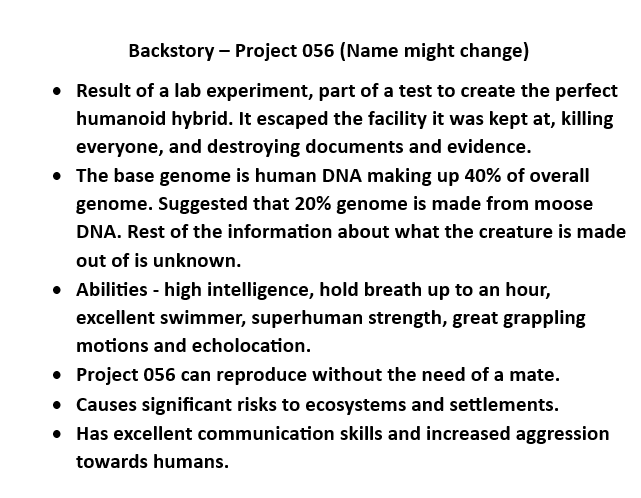
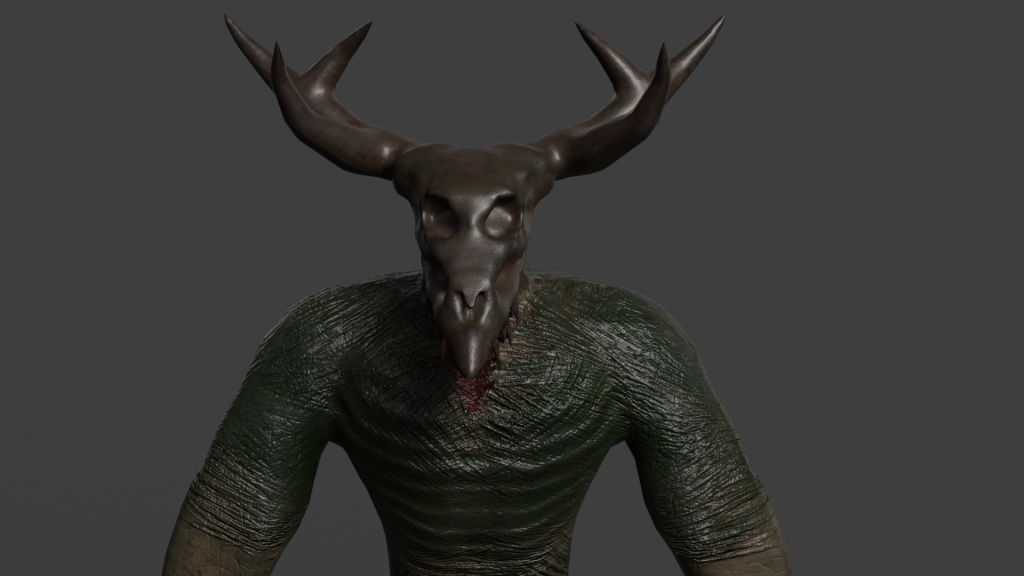
In this module I was tasked with creating 3 animation sequences with the character I made in the previous module (3D Character Design), a found 3D asset or with a model that has been provided. I am choosing to animate the character I named “Project-056” from the 3D Character Design module as I want to make animation sequences that show my character’s traits and personality.
Research
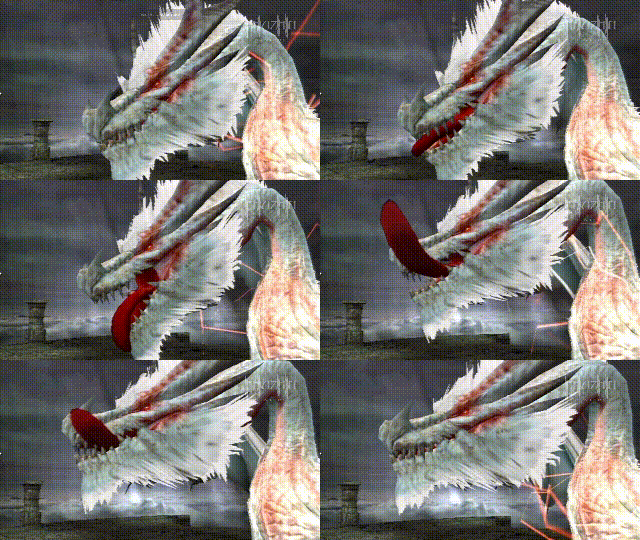
Considering that Project-056 is not human and has a somewhat distinct build, I had to think about looking at animals that are similar to it anatomically. The creatures from the video game series Monster Hunter, including all incarnations of Fatalis, Lunagaron, and Rajang, Monsterverse Godzilla, the Rake from In Silence, and the Indoraptor from Jurassic World Fallen Kingdom, serve as the primary inspiration for the sequences I will be talking about. All of these made-up animals share a body structure with the character I’ll be animating, so it will serve as the foundation for my character’s movements.

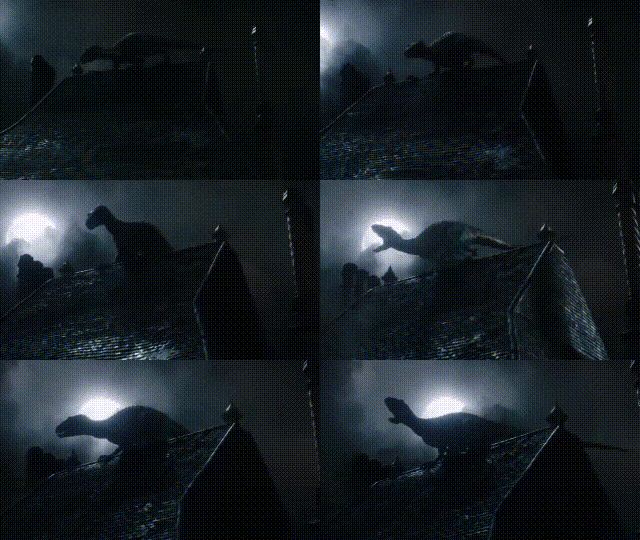
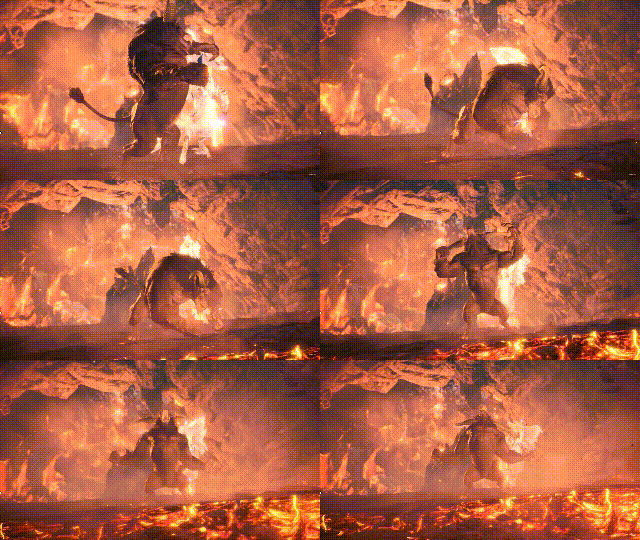
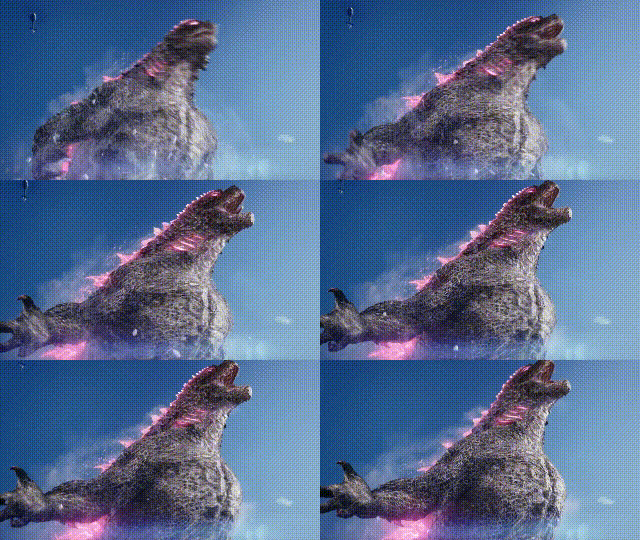
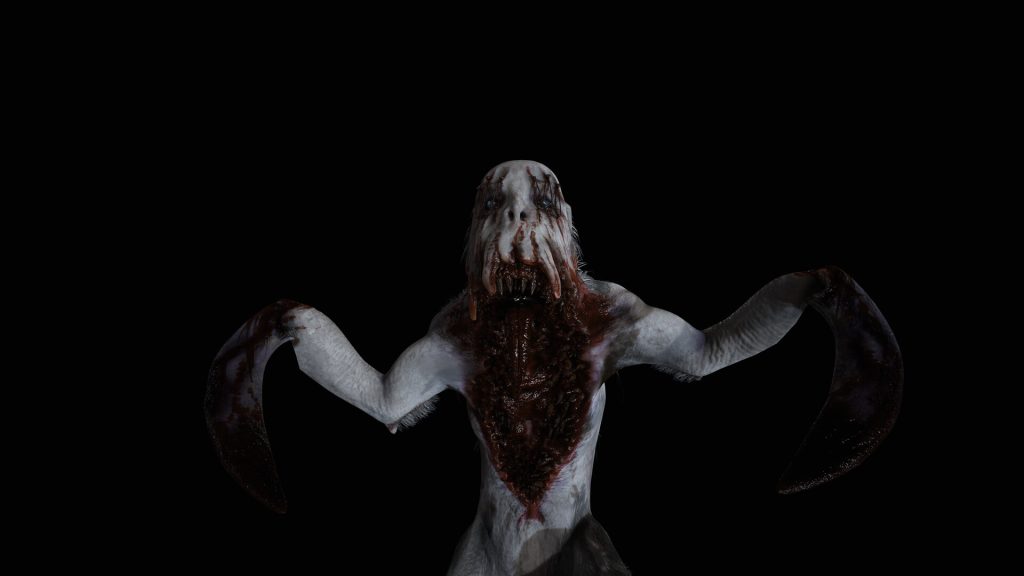
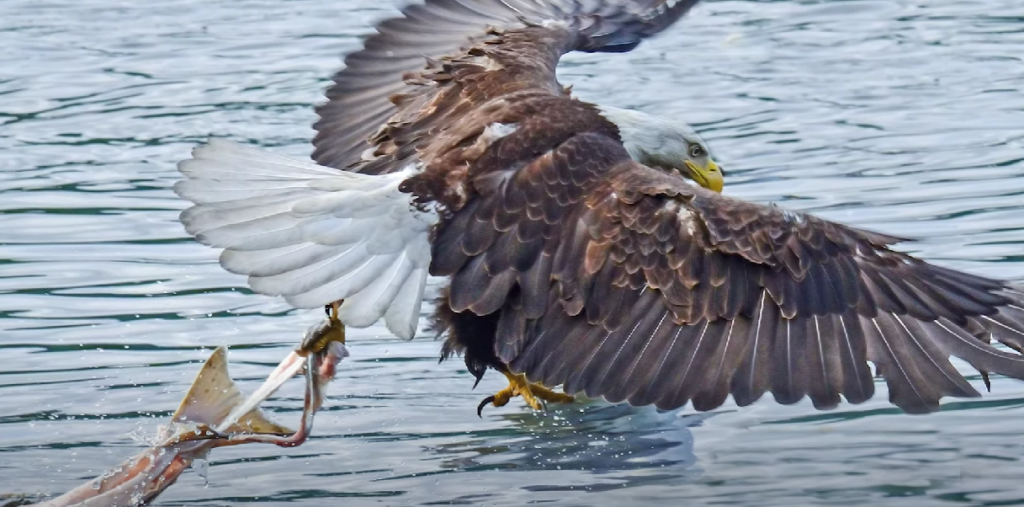
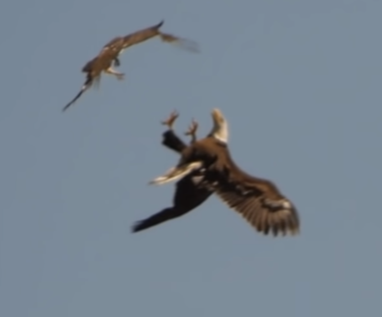
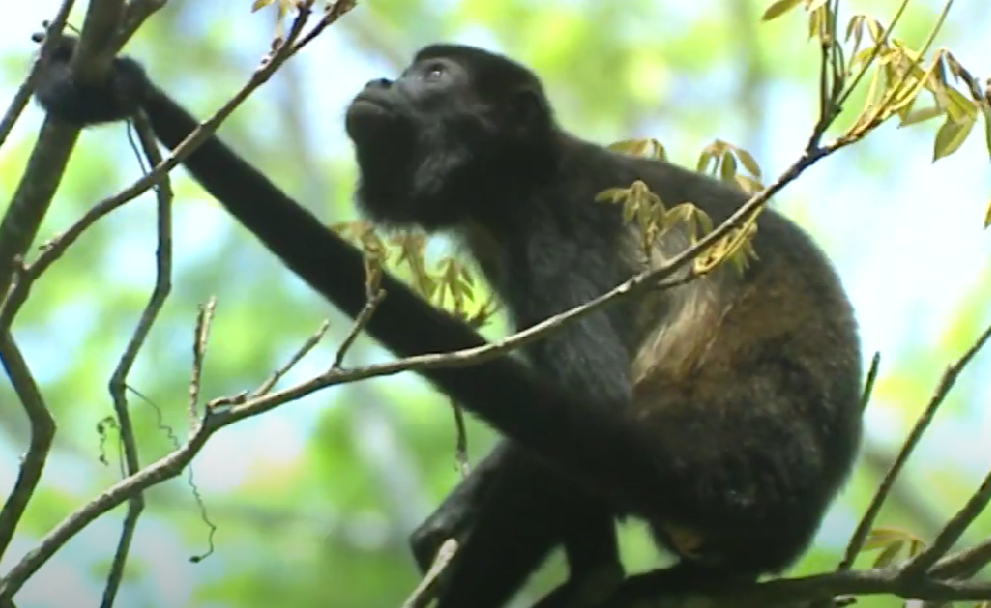
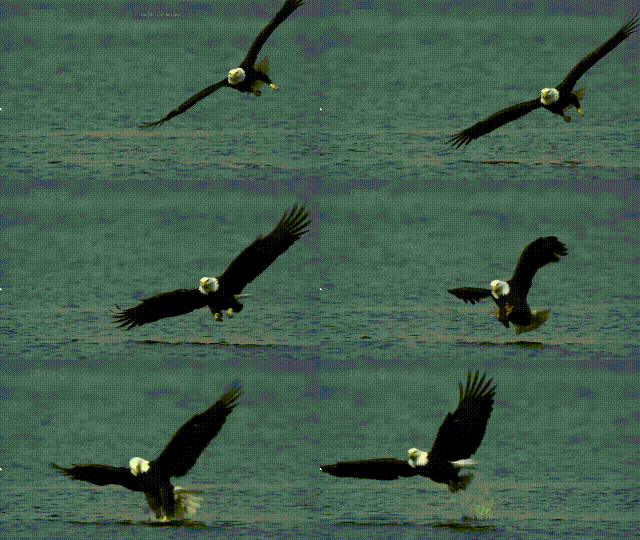
Of course I am also taking inspiration from various real life animals such as eagles for the foot claws, dinosaurs such as the Velociraptor for the jaw and tail movement and humans (as well as monkeys) for general hand, arm, leg, head and torso movements. Again, finding reference videos for these will help with the overall animation of my character.
Sequence Planning
For the sequences that I am going to make, I had 3 definitive ideas: roar sequence, attack sequence and idle sequence. I decided on those since it would be easier to convey what the character is: a humanoid creature. I am aiming for this as I want to show how the character would act and possibly hint at what it could be capable of by these simple actions. I also have to consider the 12 animation principles when making the sequences. The 12 principles of animation were formed by two animators at Disney named Frank Thomas and Ollie Johnston, basically they are rules that an animator has to follow to make the animation seem believable, they are as follows: arcs, timing, solid drawing, anticipation, staging, appeal, exaggeration, squash and stretch, straight ahead and pose to pose, slow in slow out, follow through/overlapping action and secondary action. For my sequences, the animation principles that would apply are timing, arcs, pose to pose, secondary action, follow through and appeal, but I will be referring to the other animation principles as when they appear (Coron, T., 2022).
Attack Sequence Reference
I will probably utilise the reference video below for the attack animation sequence. As can be observed, as the character walks, there is a secondary action on the tail, and when the character uses their claws to attack, there is an overlapping action in the rest of their body. I would also need to take into account the numerous arcs that are involved in the arms total movement. I will modify this slightly as there are pauses between the character’s movements, and I will also include a defensive stance for my character at the end of the sequence.
Idle Sequence Reference
As you can see below, I was able to get an internet reference for this as well. However, because the video is so short—just 7 seconds—I will need to add more motions or slow it down in order to make it to the 10-second threshold. Fortunately, there aren’t as many positions as in the previous reference, thus editing this shouldn’t be too tough.
Roar Sequence Reference
This last example came from the same YouTube video as the previous one, but this time it was an animation of a roar. The issue is that I had to cut this down from the original clip’s 2 seconds to 5 seconds, which means I would have to add an action after the roar. Perhaps an action from one of the animations that inspired me previously would be a suitable choice in this regard. I was thinking of adding a tongue animation to my character, similar to the White Fatalis example that I showed above, with a foot claw movement at the beginning of the sequence that would move the foot towards an object that I could put in the scene that that could grab it like an eagle claw would.